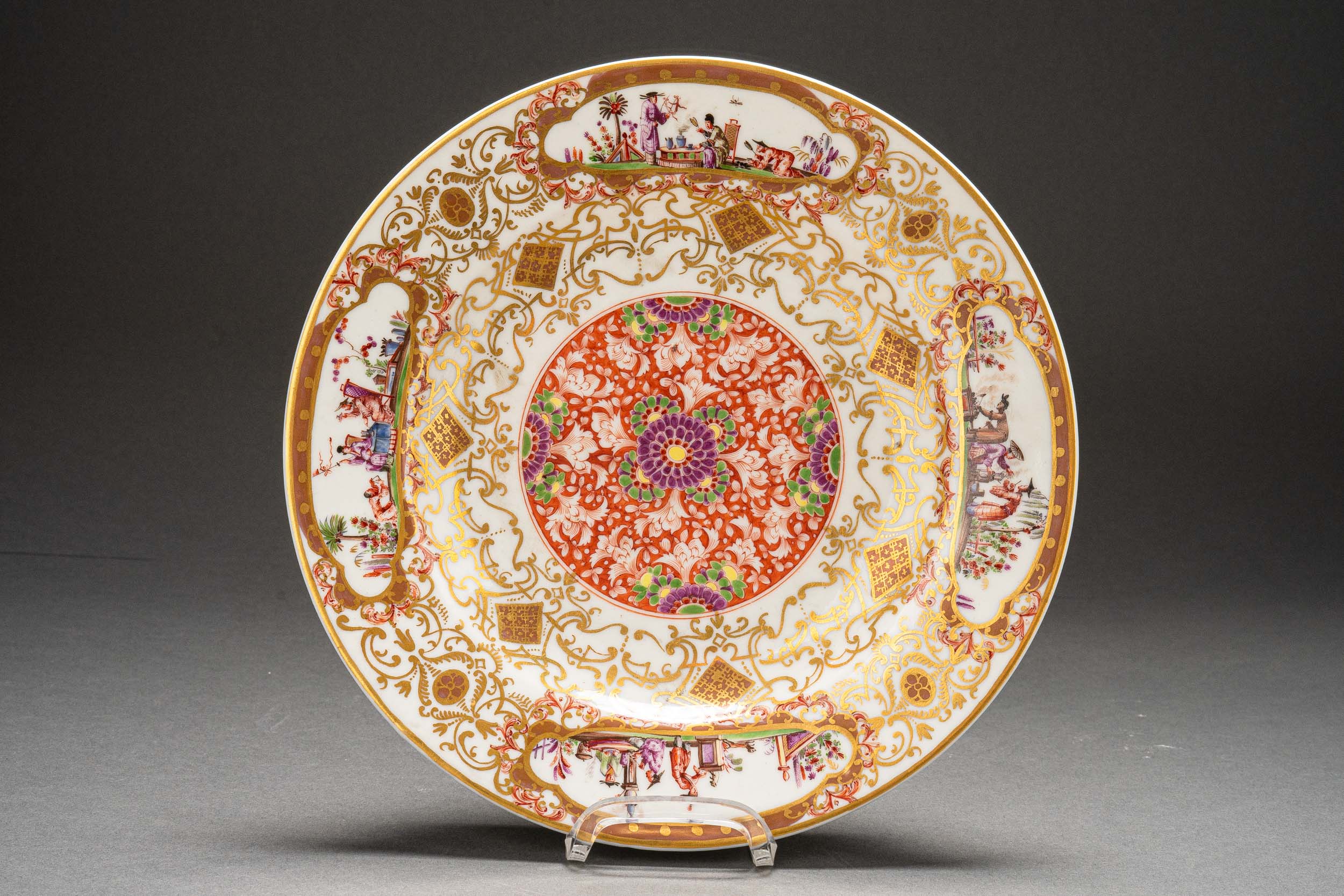
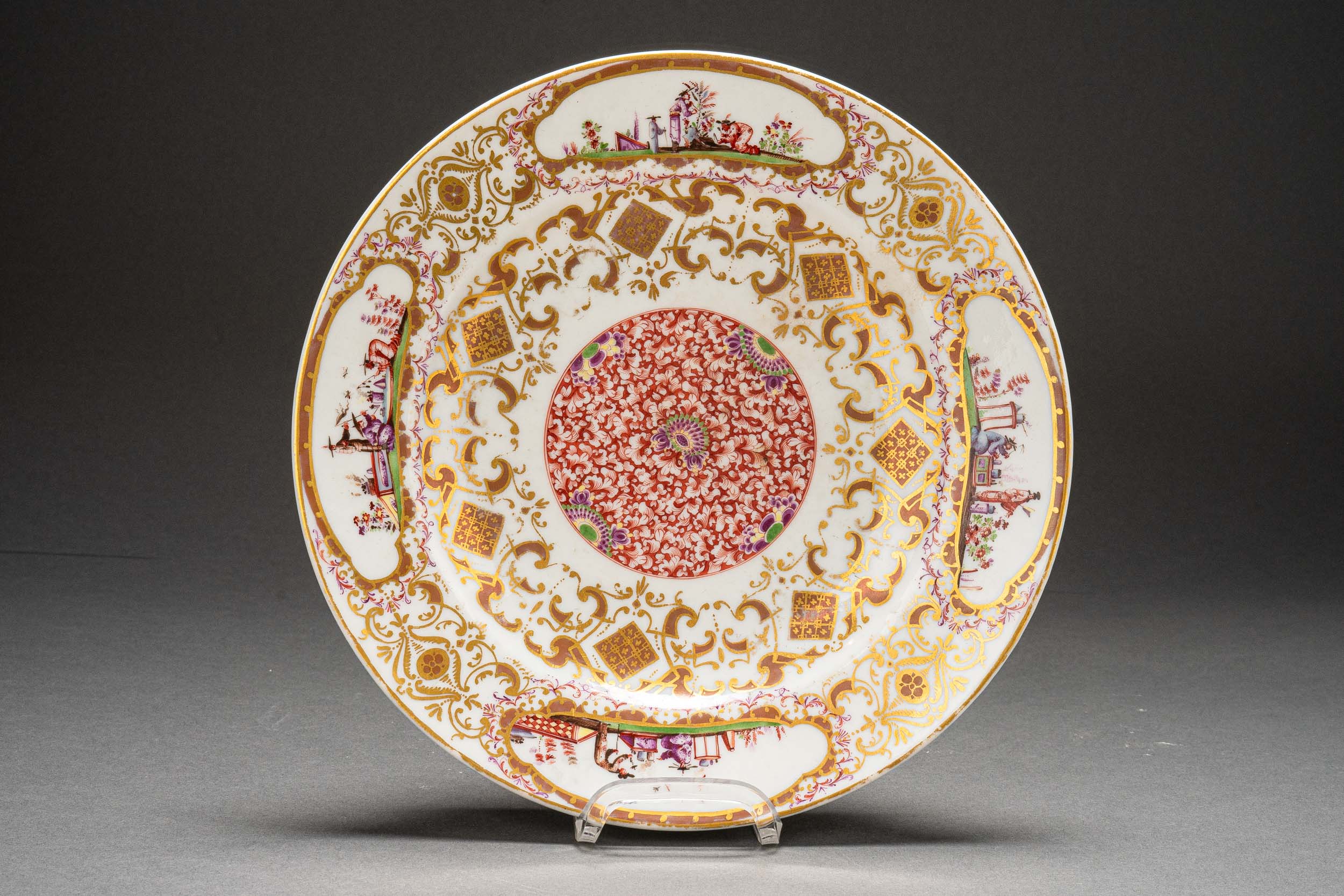
Two rare deep "Salami" plates
Height: 3.4 cm; Ø 22 cm / Large swords marks; Meissen 1726/27
Provenance: The Jules and Anna Porgès Collection
Height: 3.4 cm; Ø 22 cm / Large swords marks; Meissen 1726/27
Provenance: The Jules and Anna Porgès Collection
Unsere tiefen Schalen sind auf dem Gebiet der Salami Porzellane eine kleine Sensation. Es sind die bislang einzig als solche bekannt gewordenen tiefen Unterschalen. Sie gehören (ebenso wie ihre flachen Pendants) zu keinem Service, waren also keine Teller im engeren Sinne, sondern dienten als prunkvolle (Unter)-Schalen den ebenso prächtigen, kleinen Terrinen bzw. Wochenschüsseln, deren Dekore sich wundervoll ergänzten aber nicht identisch waren (vgl. unsere Expertise zu den Olio-Töpfen).
Die tiefen Unterschalen hat Meissen bei etwas höheren Equelle-Formen bevorzugt (vgl. unsere KPM Zuckerdose mit tiefer Salami Unterschale). Die höheren Formen sind deutlich seltener, das erklärt auch die größere Seltenheit dieses Salami Typs.
Wir datieren unsere Schalen mit 1726/27. Interessanterweise finden sich bei einer der zwei Unterschalen zaghafte Goldelemente in den Kartuschen, im Gegensatz zu allen anderen bekannten Salami-Unterschalen, bei denen in die chinoisen Kartuschen keinerlei Goldelemente eingefügt sind. Bis Mitte März 1726 ist das für alle Höroldt Chinoiserien ausgeschlossen, da bis dahin die Goldmalerei ausschließlich und ausnahmslos von George Funcke und dessen Dresdener Werkstatt ausgeführt wurden (siehe unsere Beilage 1726 — Das Jahr der Wende in der Meissner Goldmalerei).
Ab diesem Zeitpunkt kamen die Golddekore aus Höroldts Werkstatt, die sogleich ihre volle Pracht entfalten konnten. Während man mit den Goldzutaten innerhalb der Kartuschen nur zögerlich begann, es dauerte eine Weile bis die Goldmalerei innerhalb der Chinoiserie ihren Platz fand.