A113

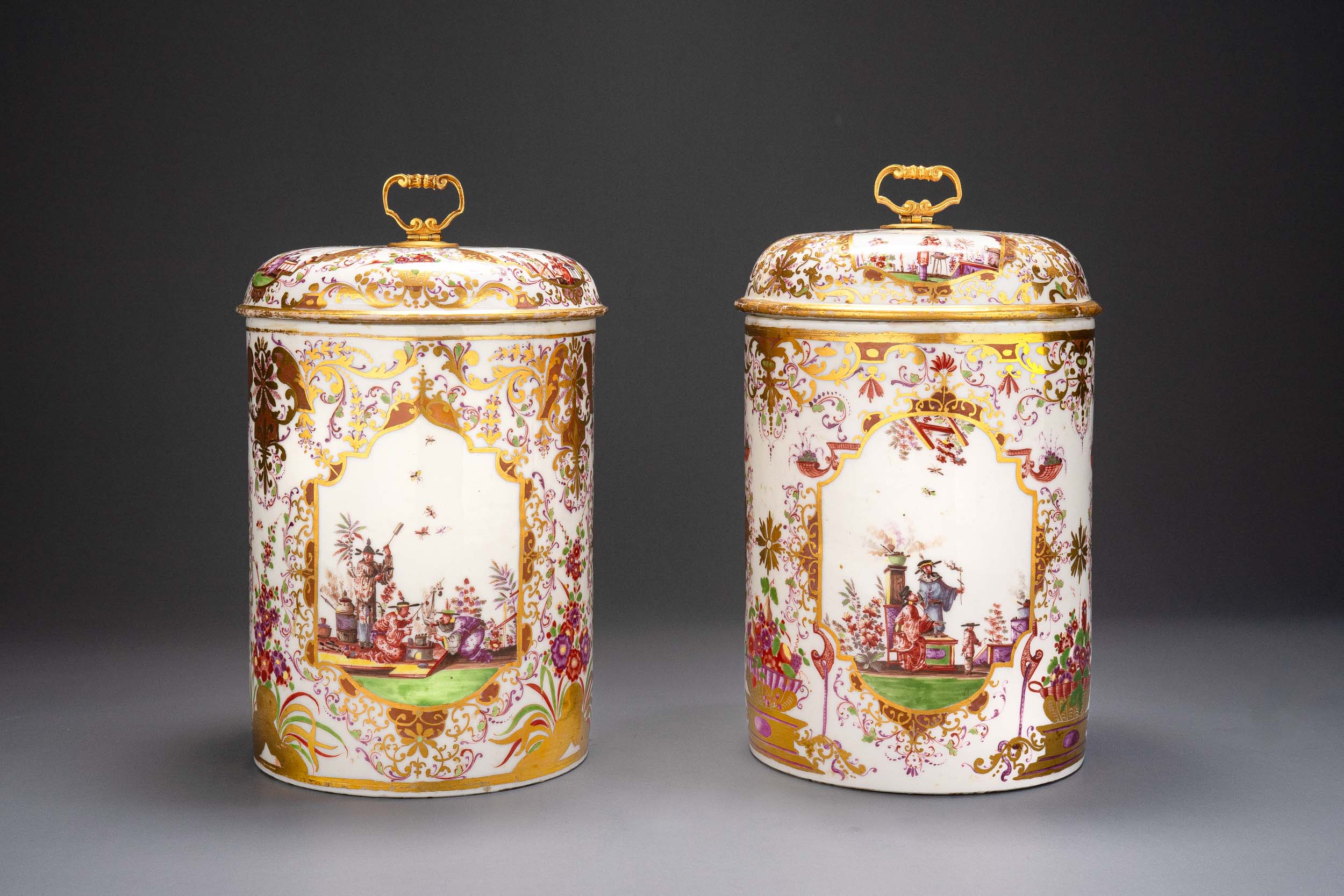
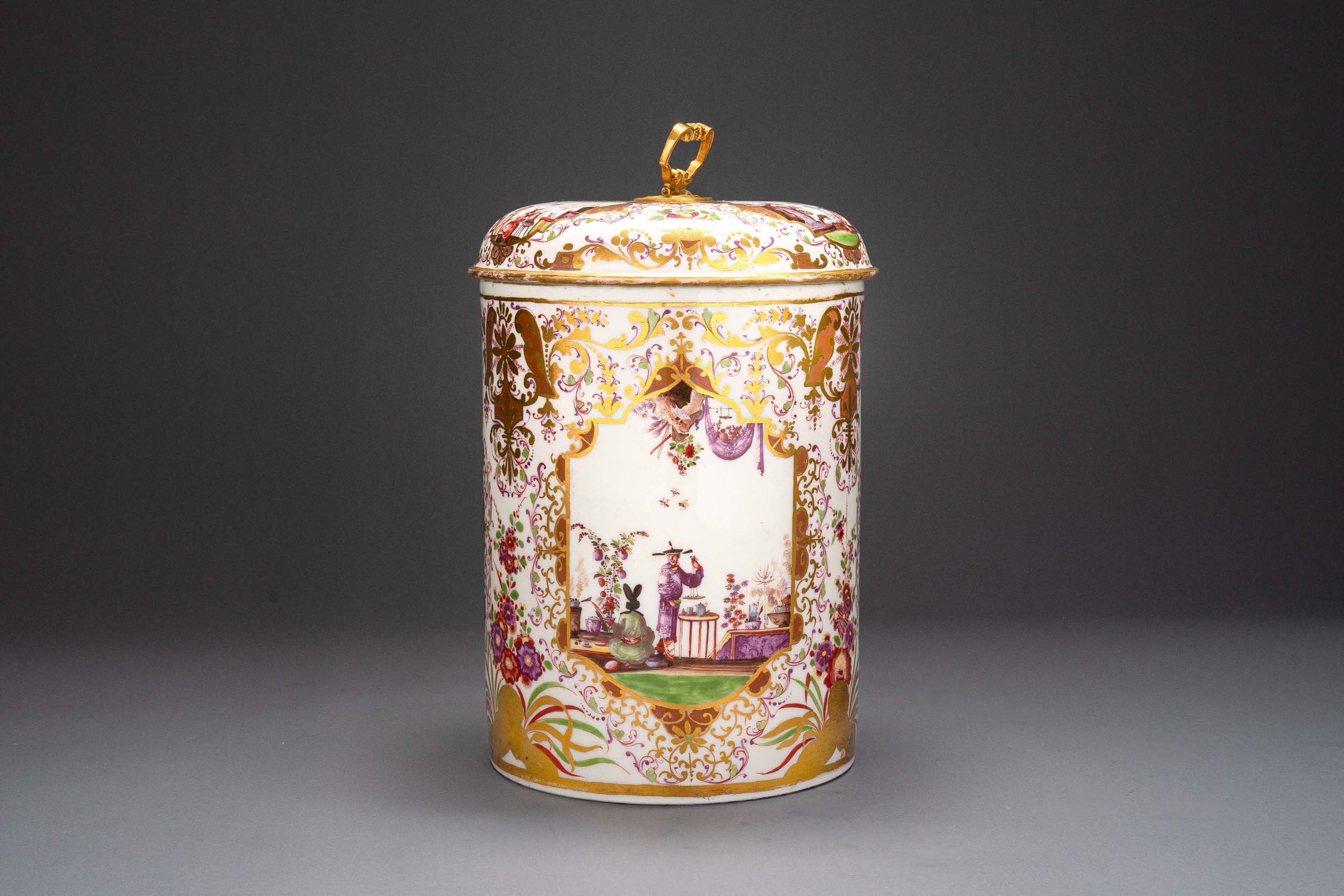
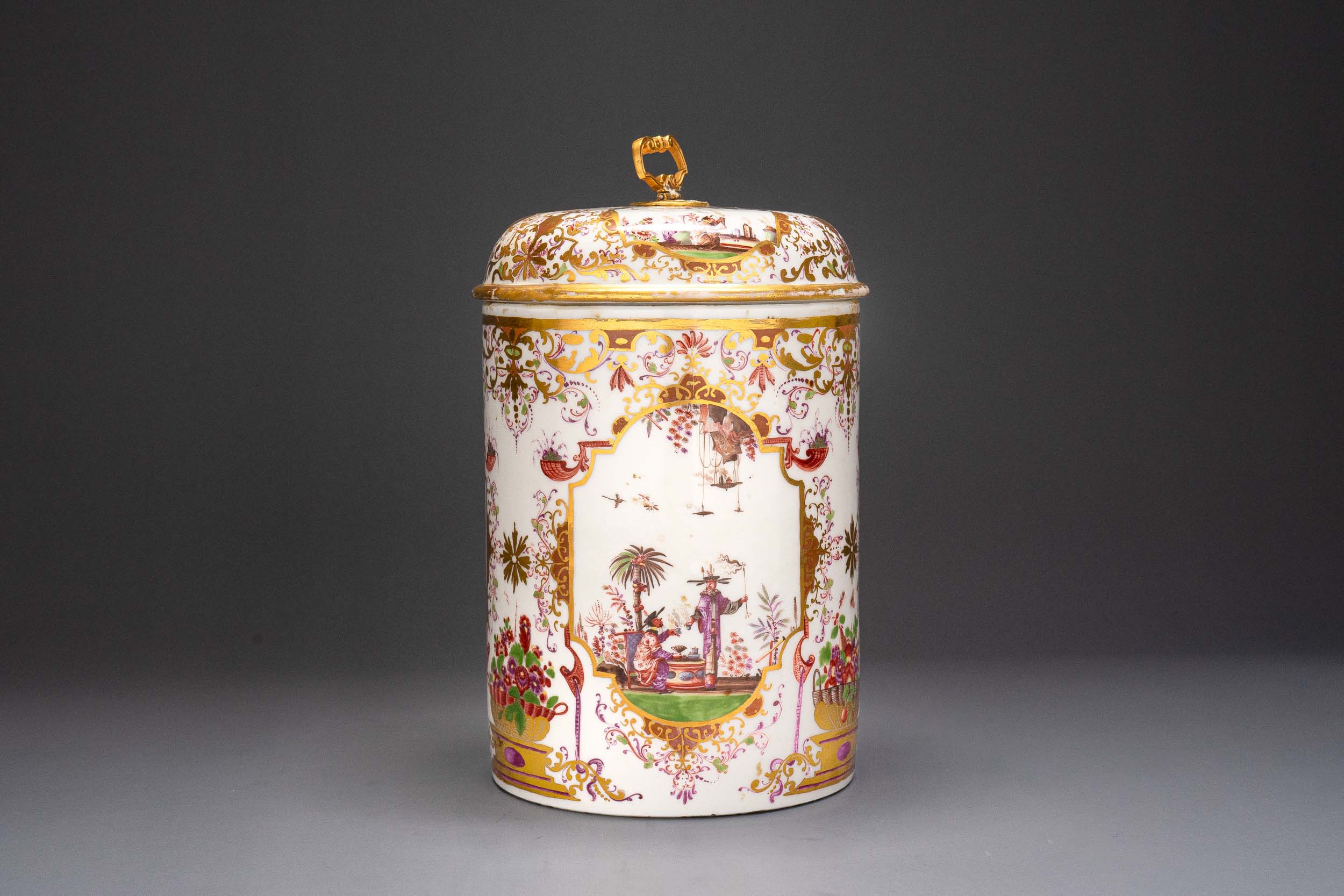
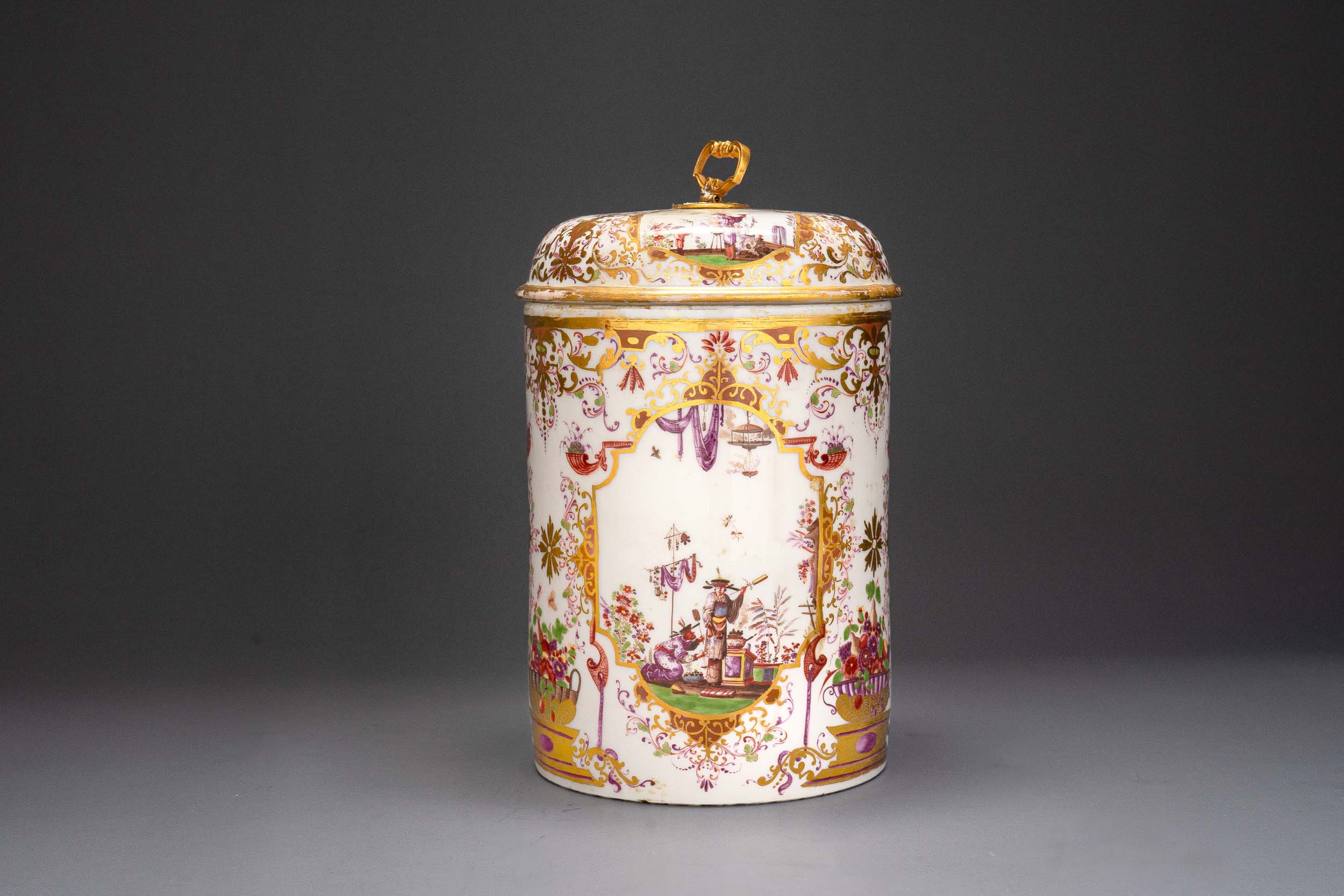
Our tobacco pots mark the beginning of a glorious new era in the work of Johann Gregorius Höroldt. In 1726, in addition to his mastery of enamel painting, he also succeeded in mastering the art of gold decoration. The previous simple style of George Funcke‘s gold decoration was overcome and replaced by Höroldt’s own ingenious inventions, which led to perfection of his style.

Painting

Our two tobacco pots are of outstanding picturesque and decorative quality. They represent the beginning of a new era. The previous work of the independent gold painter George Funcke was replaced and all of his work was taken over by Höroldt under his own direction. This enabled him to replace the traditional style with the ‘simple’ gold borders and the so-called Funcke flowers and to merge enamel and gold painting into a new decorative unit. Höroldt’s imagination and ingenuity also enabled him — as he had predicted — to achieve extraordinary results in this new field. He also drew inspiration for his new gold and lustre decorations from the French ornamentalists of the time.

Our tobacco ‘Büchßen’, as they were called in the manufactory, are a classic example of this decorative new beginning by Höroldt, which opened up a whole new dimension to his style. The elegant interplay between the chinoiserie cartouche painting and the new ornamentation of the rich gold and lustre decorations made it possible to create an even larger display of splendour. The overall impression became more unified, even more opulent and even more luxurious — a new splendid period began.

When looking at our tobacco pots, you can literally feel Höroldt’s joy in playing with his new possibilities and making the best of it (see our supplement in the appendix ‘1726 – The Year of the Turning Point in Meissen Gold Painting’).

The painting has slight references to the Schulz Codex:

  • Pot 2 (right, fig. on title): The seated man under the palm tree at the table corresponds to
  • sheet 8 I 7
  • Pot 2 (left): The kneeling man on the left with the ‘bell stick’ corresponds to sheet 52 III 1
  • Pot 1 (left): The seated Chinese woman in rear view with the characteristic hairstyle
  • Pot 1 (left): The fountain can also be found on an Equelle in the Dresden Porcelain Collection in the Zwinger (1996 no. 132)

Literatur

Request price and expertise

Please send me the price and the expertise for this item by e-mail.