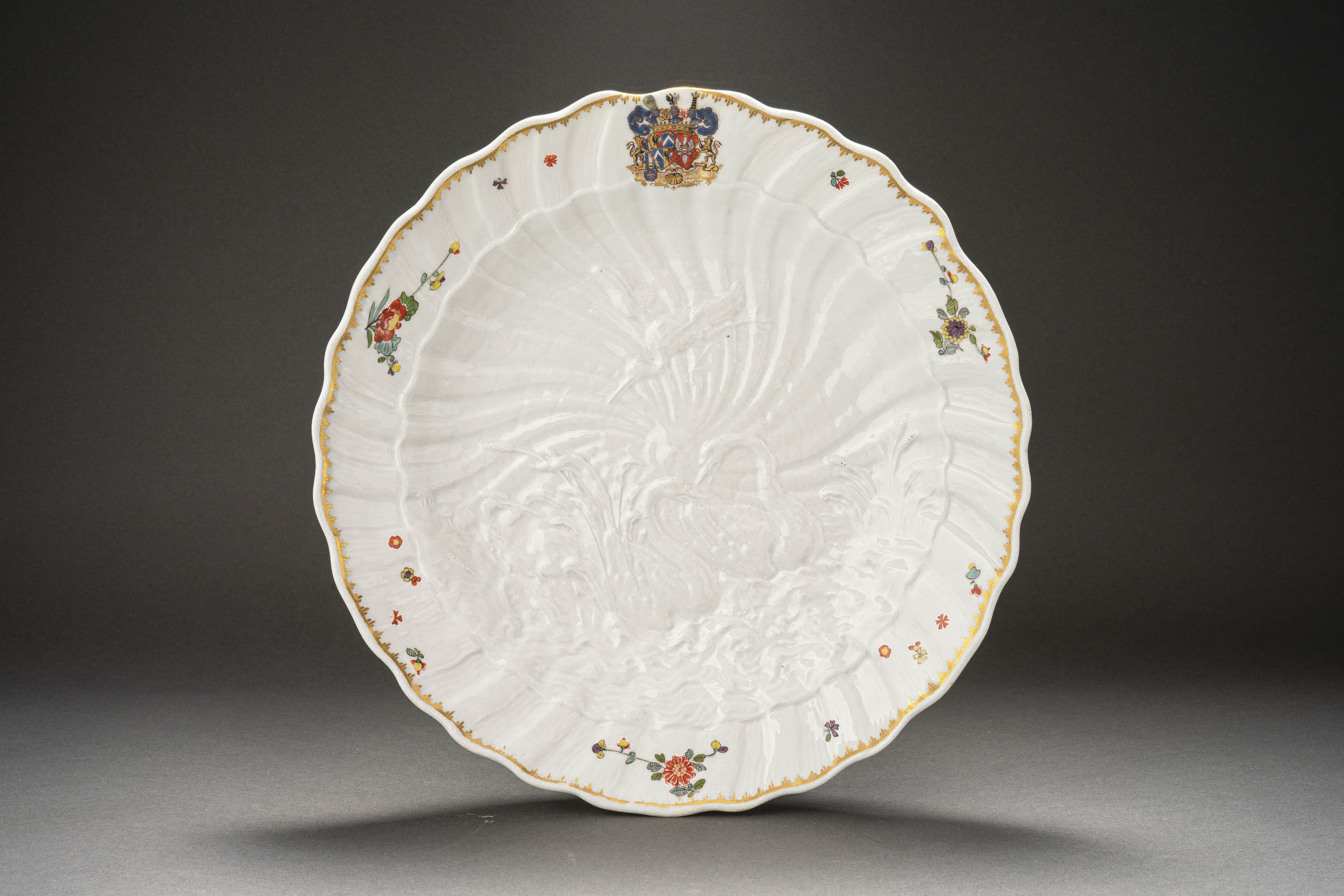
Schüssel (No. 2) aus dem Schwanenservice des Grafen Brühl
Modell von Johann Joachim Kaendler, Meissen 1738–41
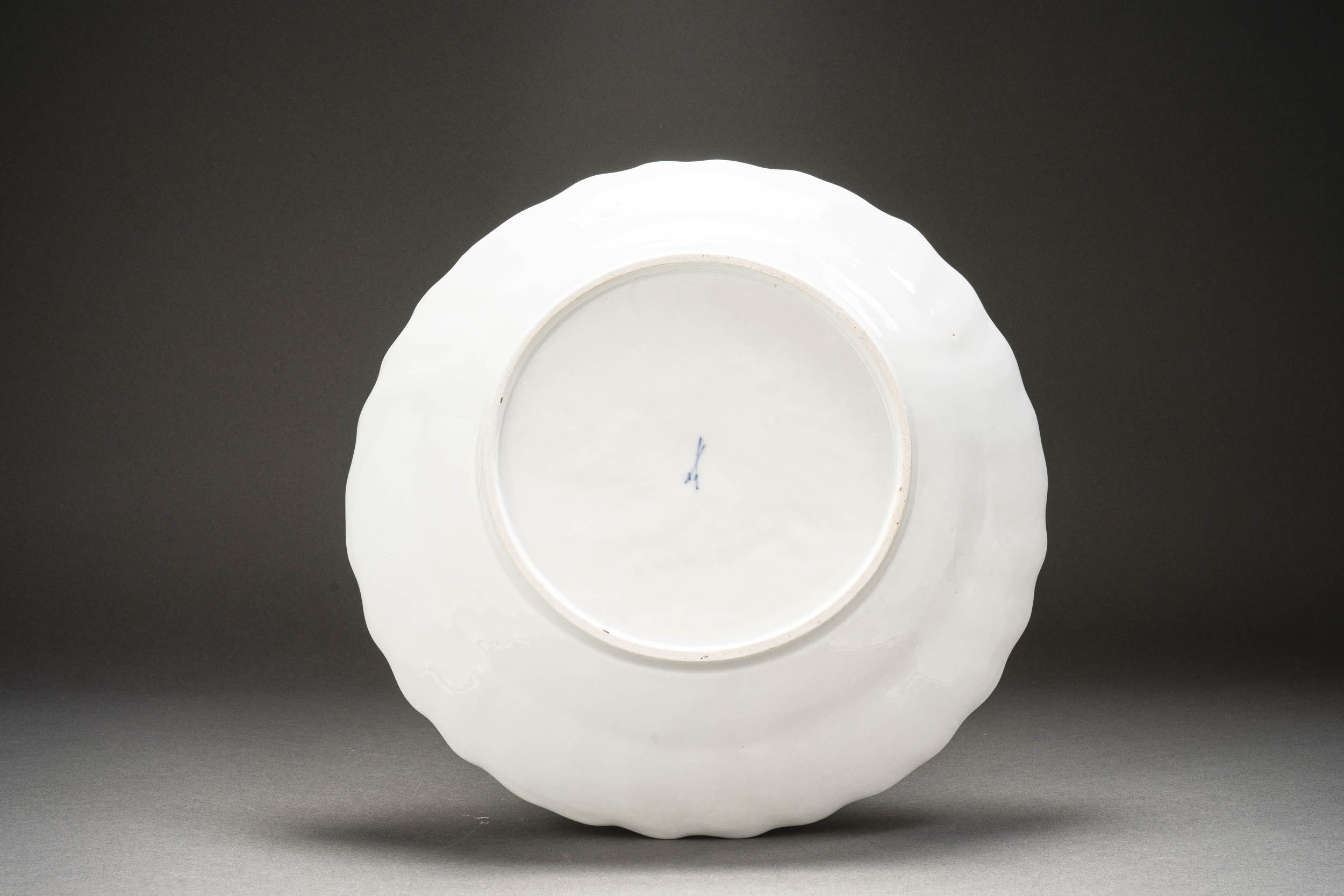
Ø 30 cm; unterglasurblaue Schwertermarke
Schwanenservice-„Dessin“ mit Reiher mit Karpfen im Schnabel; mit der sog. „Kaendler’schen Hütte“ links; das Relief nach der Innenseite der Jakobsmuschel modelliert
Ritzzeichen: „2“ — die diskret am Standring eingeritzte „2“ ist ein Größenzeichen, das die Schüsseln von etwa 30 cm Durchmesser tragen und die auch betriebsintern als „solche Schüsseln No. 2“ bezeichnet wurden. Das Schwanenservice hatte nicht weniger als fünf verschiedene Schüsselgrößen:
No 2 = 30 cm
No 3 = 34 cm
No 4 = 38 cm
No 5 = 43 cm
No 6 = 47 cm
Das Schwanenservice-„Dessin“
Die Idee Kaendlers zum Schwanenservice-„Dessin“ entstand im April 1736. Dort hatte er seine geniale Invention in seinem Arbeitsbericht erstmals festgehalten (Pietsch Arbeitsberichte, April 1736, lfd. Nr. 5):
„In einem Teller Forme Welche in Gestalt einer Seemuschel war, zwey schwimmende Schwäne nebst zwei anderen Waßer Vögeln und Schilf flach hineingeschniten.“
Brühl war von dem Entwurf und dem Probeteller begeistert, sein Plan — ähnlich wie Sulkowski — für sich selbst ein großes repräsentatives Tafelservice machen zu lassen, nahm damit Gestalt an. Schon im nächsten Monat hat er in Abstimmung mit dem Grafen Sulkowski und Kaendler die Weichen dafür gestellt. In dem Monatsrapport an die Manufakturkommission vom Mai 1736 wird dies explizit festgehalten (Betriebsarchich TAa 24b fol. 147 zit. nach Rückert 1990 S. 267):
„,Wenn dieses (= Sulkowski Service) zustande kommen wird, wiederumb ein neues Taffelservis vor des H. Geh. Cabinet Minister von Brühl Excellenz von ganz neuer Facon verlanget worden.‘ Das war der Auftakt zum Schwaenenservice.“ (Rückert ebd.)
Die Beteiligten haben sich an diese grundlegende Abmachung gehalten. Die Arbeiten an dem Großtierauftrag zur Ausstattung des Japanischen Palais wurden sofort und abrupt im Mai 1736 eingestellt (Wittwer S. 56 ff.), um die Kapazitäten der Manufaktur für die Großaufträge der Minister frei zu machen. Die Arbeiten am Sulkowsi-Service wurden bis Herbst 1737 abgeschlossen, unmittelbar anschließend wurde mit dem Brühl’schen Service begonnen.
Kaendler hat alsdann relativ früh mit der Modellierung der großen Schüsseln in Feierabendarbeit begonnen. Die fünf verschiedenen Größen sind zwischen April und Juli 1738 entstanden, wie er in einem summarischen Arbeitsbericht festgehalten hat (Betriebsarchiv Aa I Ab 11, fol. 168, zit. nach Pietsch 2000 Nr. 28, nicht bei Pietsch Arbeitsberichte 2002 und auch nicht bei Rafael):
„Fünf Stück Schüßeln, von No. 2 bis No. 6 nach dem Abfall [also der Größe nach, Anm. von uns], in Gestalt einer gewachsenen Muschel, worinnen Waßer, worauf 2. sauber ausgearbeitete Schwäne im Schilff schwimmen, nebst einem Fischreyher, welcher einen Fisch in Schnabel hält, dergleichen auch einer über dem Waßer flieget, vor Sr Excellenz den Herrn Reichs Grafen von Brühlen.“
Die gesamte Produktionsperiode für das große Tafel-, Dessert-, und Frühstücksservice des Grafen Brühl, das ursprünglich aus rd. 3000 Teilen bestand, umfasst den Zeitraum von 1737 bis 1741. Der Entstehungszeitraum unserer Schüssel, lässt sich genauer eingrenzen: sie kann nicht vor 1738 entstanden sein. Kaendler erwähnt in seinem oben zitierten Arbeitsbericht ausdrücklich erstmals den Fisch, den der Reiher links im Bild in seinem Schnabel hält. Wie der Probeteller, den Kaendler 1737 schuf und der sich einst in unserem Besitz befand, zeigt, fehlte dieser Fisch im ersten Entwurf (Langeloh 2019 Nr. 121 S. 658 ff.).
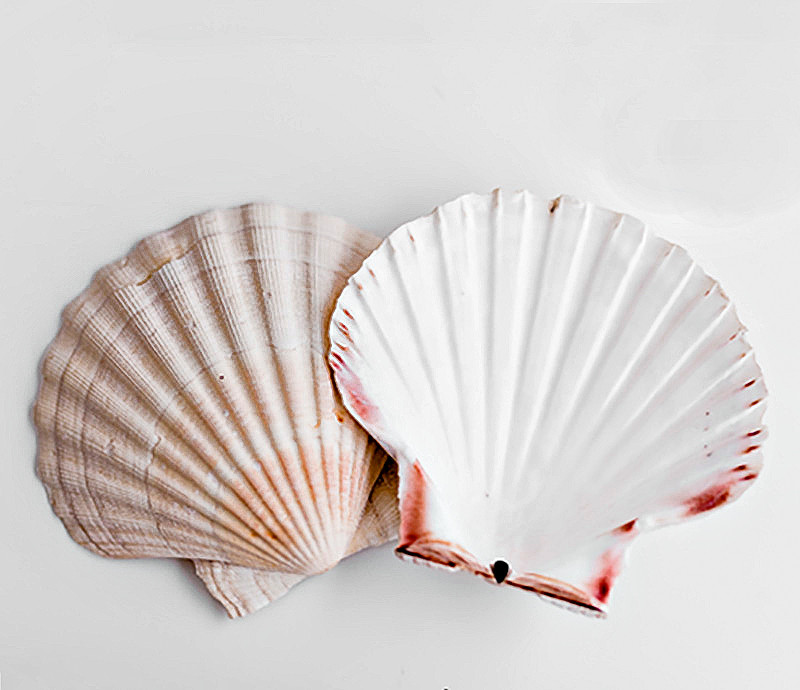
Eine weitere Feinheit begrenzt den Entstehungszeitpunkt unserer Schüssel zusätzlich. Kaendler hat im Januar 1738 die Muschelform (nicht die eingeschnitten Reliefteile des Dessins) geändert, indem er nunmehr nicht mehr die Außen-, sondern die Innenseite der Jakobsmuschel, die ihm als Vorbild gedient hat, abbildet (Wir verdanken diese Erkenntnis Prof. Ulrich Doering, Lüneburg).
Diese Änderung geht auf Naturstudien Kaendlers im Januar 1738 zurück. Während eines dreitägigen Dresden Aufenthalts hat er „allda in der Naturalienkammer unterschiedliche rare Muscheln abgezeichnet und in genauen Augenschein genommen, damit vorerwähntes (Schwanen)-Service desto natürlicher darnach eingerichtet werden kann.“ (Goder 1985 S. 1875).
Dazu passen Kaendlers Arbeitsberichte, die in den Januar 1738 fallen, und in denen er schreibt:
„Zum großen Service einen Suppen Teller in Gestalt einer Muschel gefertiget …“ (lfd. Nr. 1)
„Ferner einen ordinaren Teller Welcher nicht so tieff als Voriger […] Und zwar sind diese Tellern [der Suppenteller und der ordinäre, Anmerkung von uns] Was die Muschel betrifft Noch Einmal Verändert Damit Zweyerley Arten sind“ (lfd. Nr. 3)
Die „Zweyerley Arten“ beziehen sich klar auf den Unterschied von innerer und äußerer Wandung der Jakobsmuschel. Bei allen Schwanenservice-Teilen, die vor Januar 1738 gefertigt worden sind, durchkreuzen Querrillen die radialen Muschelrippen auf der Fahne — d.h. sie sind nach der Außenseite der Jakobsmuschel gestaltet. Auf unserer Schüssel fehlen diese Querrillen, was bedeutet, dass sie nach der Innenseite gestaltet und somit nach Januar 1738 entstanden ist (siehe Langeloh 2019 S. 663).
Wann die sog. „Kaendler’sche Fischerhütte“ Bestandteil des Schwanenservice-Dekors geworden ist, die auf unserem Exemplar auf Höhe des Reiherkopfes zu sehen ist, ist noch nicht bekannt, da Notizen Kaendlers hierzu fehlen — es wird aber sicherlich auch in diese Phase gefallen sein (denn auch sie fehlt beim frühen Dessin des Probetellers). Die dargestellten Besonderheiten unserer Schüssel erlauben die Vermutung, dass sie in dieser Experimentierphase Kaendlers aus den ersten Monaten des Jahres 1738 stammt.
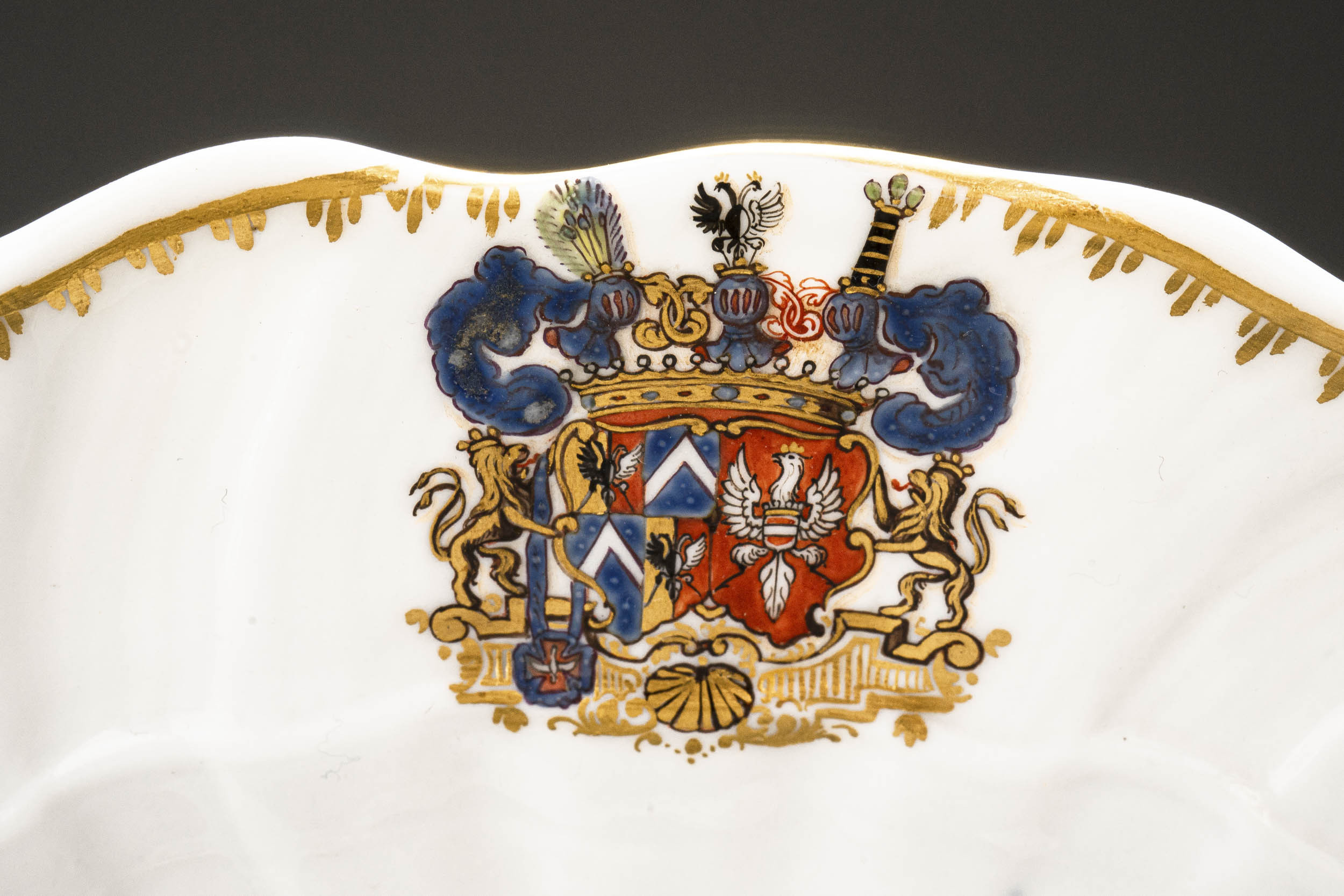
Das „Dessin“ von „ganz neuer Facon“ besticht durch die von Kaendler komplett weiß belassene plastische Oberfläche des Spiegels. Die Fahne ist mit dem Allianzwappen des Grafen Brühl und seiner Gemahlin, der Gräfin Kolowrat-Krakovský und mit einem fein gezackten Goldrand sowie indianischen Blumen dekoriert.
Die Anregung für den Reliefdekor entnahm Kaendler Vorlagenstichen von Wenzel Hollar (1607–1677), die 1700 im Verlag des Johann Leonhard Buggel in Nürnberg herausgegeben wurden (Ausstellungskatalog 2010 S. 47 u. Fn. 61; Siegfried Ducret Weltkunst Nr. 6/1963 vom 15.3. S. 13; Cassidy-Geiger in Keramos 119/1988 S. 64-68; Pietsch 2000 S. 47). Das Kaendler’sche Skizzenblatt hierzu hat sich im Manufaktur-Archiv erhalten (siehe Pietsch 2000 S. 48 Abb 38; Dr. Willi Goder, Porzellanmaler und Direktor für Geschichtsforschung an der Staatlichen Porzellanmanufaktur Meissen, in Weltkunst Nr. 13/1985 vom 1.7. S. 1875).
Das Programm, das dem gesamten Service zugrunde lag, basiert auf der Verherrlichung des aus dem Germanischen stammenden Begriffs „Brühl“ = „feuchter, bewachsener Ort“ (Deutsches Wörterbuch).
Vergleichsstücke:
siehe Pietsch, Ulrich (ehem. Direktor der Dresdener Porzellansammlung im Zwinger): Schwanenservice: Meissener Porzellan für Heinrich Graf von Brühl (1700 – 1763). Leipzig 2000 Kat.-Nr. 26 S. 157, u.a.:
Bayerisches Nationalmuseum, Slg. Schneider in Schloss Lustheim, Inv. Nr. 1571 u. 1573 (2 Stück)
The Detroit Institute of Arts, Inv. Nr. 62.77
Musem für Kunst und Kulturgeschichte Dortmund, Inv. Nr. C6824
Museum für Kunsthandwerk Frankfurt, Inv. Nr. 12131/RF347
The Metropolitan Musem of Art New York, Inv. Nr. 747
The Cummer Museum of Arts and Gardens, Jacksonville Inv. Nr. 526 u. 527 (2 Stück)